Showing posts with label Goodreads. Show all posts

Wednesday, February 1, 2012

Stuck in the Middlemarch with You

As I wrote last week, there are a number of people in the private Sly Wit Goodreads discussion group who would like to participate in a longer-term read of Middlemarch starting this month. The goal would be to read 5 chapters a week, which, in my lovely edition designed by Coralie Bickford-Smith, means about 50 pages. (As a sidenote, if you are looking to pick up some classics for a relatively cheap price, Bickford-Smith’s clothbound series are really beautiful and almost all available at Amazon.)


Middlemarch is one classic that I’ve been meaning to read for awhile but just never managed to make time for, so I’m pleased that others are going to be joining me in the discussion and hopefully nudge me along. As I am currently trapped in Super Bowl hell in lovely Indianapolis, I won’t be starting until this weekend, but feel free to start posting in the discussion threads whenever you like. I only ask that you refrain from posting too far ahead of where we are as a group.

If you would like to join us, please let me know on Goodreads and I will send you an invitation.

In other book news, I got a bit crazy with my multi-reading in January and am still tying up loose ends from that so I probably won’t begin Lolita for another week or so.

Sunday, January 1, 2012

2012 Book Challenge: Readers’ Choices

The results are in!

Reader’s choice quickly became readers’ choices with so many of you voting and leaving comments. I apologize for any technical difficulties you may have encountered in doing so and greatly appreciate your efforts and opinions.


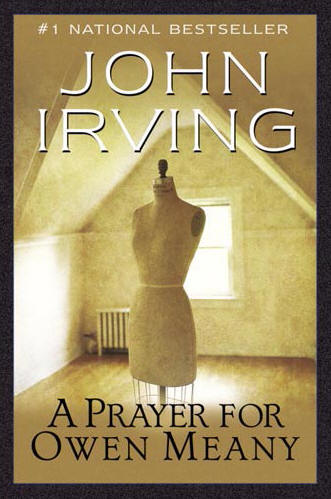
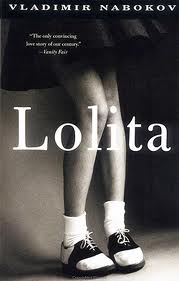
Lolita and A Prayer for Owen Meany were the clear winners. I’ve been meaning to read both of these for some time based on many personal recommendations over the years so that worked out well.


First up, however, owing to early love from John Marcher and others, is Virginia Woolf’s To the Lighthouse. I figure I might as well tackle my nemesis when I’m fresh and enthusiastic. Hopefully, the story at least features a lighthouse somewhere. Don’t tell me and crush my hopes and dreams if it doesn’t.

To the Lighthouse was one of six books in a tie for third place. I’ve decided to put all of them on the list, even Oryx and Crake, for which Jennifer made a compelling counterargument. (I’m going to blame her anti-Canadian sentiments on hormones: Jenn stop jeopardizing your baby’s future in the Great White North by criticizing Atwood—will no one think of the children!?!)

Other books I really want to read based on comments here and on Facebook and Twitter are Crime and Punishment, The Master and Margarita, Never Let Me Go, and The Sense of an Ending. That last one is strictly in honor of Aaron, ultimate Barnes fan as well as creator, potentate, and Lord High Executioner of the original Facebook challenge that kicked off this crazy reading frenzy.

So, I ended up with a list of twelve, which, if you know me at all, is a very good thing as it would drive me crazy all year long not to be matching the number selected in previous years.

The Dirty Dozen
Crime and Punishment (Fyodor Dostoyevsky)
Lolita (Vladimir Nabokov)
Midnight’s Children (Salman Rushdie)
The Master and Margarita (Mikhail Bulgakov)
Middlemarch (George Eliot)
Never Let Me Go (Kazuo Ishiguro)
Oryx and Crake (Margaret Atwood)
A Prayer for Owen Meany (John Irving)
The Sense of an Ending (Julian Barnes)
The Thirteenth Tale (Diane Setterfield)
To The Lighthouse (Virginia Woolf)
War and Peace (Leo Tolstoy)

These twelve books have 6000+ pages between them. Doable? Certainly (Goodreads tells me I read approximately 18,000 pages in 2011). Likely? Only time will tell.

If anyone wants to join me, I’m happy to read these in any order, depending on library availability (which probably only affects The Sense of an Ending, for which I’m currently no. 178 of 192 holds). Just let me know and we can coordinate.

UPDATED UPDATE (January 4):
I will be starting a secret group (meaning only members can see the group, who's in it, and what they post) on Goodreads for discussing these books as I go along. Selfishly, I am also hoping it will be a space for motivation and encouragement.

If you want to read along with any or all of these selections and join the discussion there, please contact me and I will invite you to the group. If you are not already on Goodreads, it is quite easy to set up an account just for these discussions. You can get an idea of how it looks and works by visiting my profile.

I am not getting To The Lighthouse from the library until this weekend, so I don't anticipate any real activity until next week.

Saturday, December 31, 2011

2011: The Year in Books

This year, I managed to hit my general reading goal of 60+ books. Once again, the book salon warred with the book challenge, and the salon won. I really didn’t do very well on The Great Unread challenge, although I made a valiant attempt in the final hours when a transcontinental Christmas flight with a two-hour fog delay tacked on the end allowed me to read big chunks of Giant and The Grapes of Wrath. Still many of the books were fairly short and I don’t feel the sense of accomplishment I did last year. I also haven’t been as good about immediately writing up reviews on Goodreads and that’s something I definitely want to be better about in 2012.

Top Ten of 2011
The Book of Illusions (Paul Auster)
Brat Farrar (Josephine Tey)
The Daughter of Time (Josephine Tey)
The Invisible Bridge (Julie Orringer)
Possession (A.S. Byatt)
Richard III (William Shakespeare)
Suite Française (Irène Némirovsky)
Tinker, Tailor, Soldier, Spy (John Le Carré)
Unbroken (Laura Hillenbrand)
Water for Elephants (Sara Gruen)

And now the awards!

Best Discovery: Josephine Tey (1896-1952), a Scottish mystery novelist. My love of royals and history would put her Daughter of Time at the top of my personal list, but I’d recommend starting with Brat Farrar. I love her language and the atmosphere she creates as well as how all of her mysteries are distinct from one another. If you like Agatha Christie or are an Anglophile in any way, you will like Tey.

The Book I Feel Everybody Should Read: Unbroken by Laura Hillenbrand. This true story is extraordinary in its depiction of both the barbarism and heroism of war. A gripping tale of one man’s journey from the heights of Olympic glory to the depths of a Japanese prisoner of war camp. Even if you think you don’t want to read more about World War II, you do, you really do. Hillenbrand is an amazing storyteller, deftly melding one man’s story with epic historical events. If you liked how she handled Seabiscuit, try this one out.

Longest: The Invisible Bridge by Julie Orringer (602 pages). I really enjoyed this book, despite taking forever to finish it. In fact, the story was so vivid that I could pick it up months later and continue reading where I left off without feeling like I had to go back and reread (which is extremely unusual for me). Obviously, I could totally relate to the main character's student life in Paris, but, more importantly, I also learned a tremendous amount about life in Hungary before and during the war, something I previously knew nothing about. It is a bit long, but totally worth it.


Biggest Accomplishment: Possession by A.S. Byatt. The start of this novel moves very slowly (mostly because the poetry bogs it down) and therefore it took multiple attempts over the years to get through it. However, when the mystery picks up, it becomes really thrilling and I couldn’t wait to see how it was going to be resolved. And, for once, I really liked the ending. I will definitely be keeping this one on the shelf so that I can go back and reread at some point knowing how the mystery unfolds.

Biggest Surprise: One Day by David Nicholls. When I first heard about this book while visiting friends in London, I misunderstood the premise, thinking it was about a couple who meet up on the same day every year (sort of an extended Before Sunrise, a movie that I hated). Instead, the structure of the book, glimpses into an ongoing relationship over time, really worked well. It gets a bit maudlin at the end, and the characters aren’t necessarily very sympathetic; however, that does add to the realism of it. Of course, for me, that also may have been helped by the fact that these characters graduate university about the same time I did.

The Book I Most Regret Reading: Paris, France by Gertrude Stein. Sorry, “there’s no there there.” I absolutely hated the style and attitude of this book. Completely pointless. Glad I got it off my shelves.

Favorite Young Adult Series: Matched by Ally Condie. The first volume, Matched, was a fun read with pretty good world-building, prompting an immediate re-read. As good as The Hunger Games? Not quite, but it has believably written characters and some promising loose ends to tie up as the series continues. I didn’t love the dual narrative of the second volume, Crossed, but agree that it made sense for the story told in that book. Similar to The Giver, but a more complete, realistic set-up with more relatable characters. This is tailor-made for Hollywood, so watch for it to be “coming soon” to a theater near you.


Most Useful Non-Fiction: The Creative Habit: Learn It and Use It for Life by Twyla Tharp. This book is fabulous. It is much more than a study about creativity because it focuses on the perspiration part of the process rather than the inspiration part. As Tharp says, “before you can think out of the box, you have to start with a box.” While it focuses on the arts (especially dance, musical composition, and writing), much of her discussion of discipline, organization, and habits could apply to the business world as well. There are lots of inspiring anecdotes and self-improvement exercises scattered throughout. Runner-up: Keep the Change: A Clueless Tipper’s Quest to Become the Guru of the Gratuity by Steve Dublanica.

Most Common Theme: World War II. I don’t know whether it was in the air or just on my radar, but a good chunk of my reading involved the war. In rough order of preference: the aforementioned Unbroken and The Invisible Bridge, Suite Française by Irène Némirovsky, Sarah’s Key by Tatiana de Rosnay, The Guernsey Literary and Potato Peel Pie Society by Annie Barrows and Mary Ann Shaffer, Skeletons at the Feast by Chris Bohjalian, Winter Garden by Kristin Hannah, Pictures at an Exhibition by Sara Houghteling, The Reader by Bernhard Schlink.

Most Disappointing: Fahrenheit 451 by Ray Bradbury. I was looking forward to reading this classic for our “Disturbing Dystopias” book salon, but was barely able to finish it—and it’s short! Given the concept, I should have liked this, but I absolutely hated the writing style and just couldn't get past the fact that half the time I wasn't sure what was going on or what Bradbury’s real message is. It didn’t help that he seems to be a bit of an ass in the epilogue. Runner-up: Revolution by Jennifer Donnelly.

Hardest to Finish: Any Human Heart (William Boyd). So hard that I still haven’t. (Actually I like what I read but it’s just one of those things. I’ll get back to it eventually—right after Wolf Hall.)

Favorite Audiobook: Treasure Island by Robert Louis Stevenson, read by B.J. Harrison of The Classic Tales podcast. Harrison reads a lot of adventure stories in his free short story podcast, so I bought a few full-length books for our “Classic Boys Adventures” book salon to support his work. He does a really good job with this one. 

Special Mention: Two friends came out with young adult books this year and they deserve special mention for 1) being generally awesome, 2) writing beautifully, and 3) getting me out of my comfort zone. I probably wouldn’t have picked up a book about the supernatural on my own, or one in verse, but I highly recommend both Cold Kiss by Amy Garvey and Audition by Stasia Ward Kehoe for being incredibly relatable stories about the sacrifices and choices we have to make and live with in our teen years (and beyond).


What was your favorite book of the year? And, if you haven’t already voted, what should I read next year?


Monday, April 4, 2011

The Great Unread—March

Due to my recent travels, this March book challenge post was a bit delayed—much like the reading of my own challenge book, Suite Française, by Irène Némirovsky. Suite Française caught my eye in the window of BookShop West Portal when I first moved to San Francisco. At the time, I didn’t know the story of its publication (had I realized, it might have made it off my shelf a bit quicker).

Némirovsky, a Russian-Jewish immigrant, was a successful author in interwar France. When World War II broke out, she began a planned five-part epic depicting the stages of the war. Unfortunately, she had only completed two sections of the draft manuscript when she was arrested, deported, and sent to Auschwitz in 1942, where she died one month later. Thankfully, even though her husband soon suffered the same terrible fate, their two children were able to go into hiding and survived, carrying the manuscript with them. Only years later would they realize that the notebook scribblings, which they thought were a private journal, were complete enough to be published.

The work is an incredible fictional depiction of the June exodus and later German occupation of France. I can’t imagine how good this epic might have been had the author lived to finish the novel. It was one of the works that served as inspiration for Chris Bohjalian’s Skeletons at the Feast, which I read for my “War, What Is It Good For?” book salon last month, and makes a great companion piece to that novel. You can read my reviews of both at Goodreads.

I hope everyone is making good progress on this challenge. I’d love to hear about what you’ve been reading. As for April, I am still considering my selection. Either way, it is likely to be one of two books related to last year’s challenge: Shakespeare: The Tragedies (since, now that I’ve read Macbeth, I can finally appreciate this study analyzing his four major tragedies) or Le Comte de Monte-Cristo, which I began too late last year to finish before the challenge ended.

Monday, January 10, 2011

Political Rhetoric

In my December post about my 2010 book challenge reads, I selected The Handmaid’s Tale, a disturbing portrayal of a dystopic American future, as the book I felt everybody should read. In my Goodreads review of the book, I wrote that “given the extremes in rhetoric we are hearing more and more in the public sphere, this may have been more chilling to me now than if I had read it ten years ago.” At the time, I wondered if that might be too strong a statement. The events of this weekend were a sad reminder that it was not.

While extreme rhetoric has always been with us, going back to the Founding Fathers, and I myself showed a certain fondness for Thomas Jefferson during the misguided war and escalating deficits of the Bush years,
“A little patience, and we shall see the reign of witches pass over, their spells dissolve, and the people, recovering their true sight, restore their government to its true principles. It is true that in the mean time we are suffering deeply in spirit, and incurring the horrors of a war & long oppressions of enormous public debt. But who can say what would be the evils of a scission, and when & where they would end?”—Thomas Jefferson to John Taylor, 4 June 1798

I truly hope that the events of this weekend will have people on both sides of the aisle rethinking how they contribute to the public discourse. I know I will.

Wednesday, December 22, 2010

2010: The Year in Books, Part II

One of the biggest challenges of getting through the books on my 2010 challenge list was that, as I focused more on reading, I discovered just how much was out there that I wanted to read. At times, this made my “should-read” books feel like more of a chore than they otherwise would have, which was often compounded by the additional pressure of library due dates. The following are some of my favorite reads of the year.

Top Ten of 2010

The Hunger Games by Suzanne Collins
This is one of the biggest page-turners I’ve read in the last ten years. Not only did I stay up late to get through the whole thing, but I put the second volume on hold at the library the very next morning. It’s a shame the rest of the trilogy didn’t live up to this first volume.

Thirteen Reasons Why by Jay Asher
This teen novel is suspenseful and intriguing, despite the grim subject matter of teen suicide (don’t do it!). It makes you think about destiny and all the little things that seem meaningless but may have profound consequences.

The Road by Cormac McCarthy
This beautiful novel of the love between a father and son was one of the shortest I read all year, but it certainly packs a wallop emotionally.

 Await Your Reply by Dan Chaon
This novel is well written, suspenseful, and simply one of the best multi-narrative books I’ve read in a long time. Be prepared to want to read it again from the beginning when you finish.

The Passage by Justin Cronin
A modern take on vampires and what a post-apocalyptic U.S. might look like. My only complaint is its length—it is not particularly slow-moving, but it is unnecessarily long.

The Girl with the Dragon Tattoo by Stieg Larsson
This first novel of what has been dubbed The Millennium Trilogy is exciting and smart, although quite dark. It’s a bit slow in the beginning, but once it picks up you can’t put it down.

The Girl Who Played with Fire by Stieg Larsson
This book was even better than the first one. The story was much more intricate and developed, while still moving along at brisk pace. Lisbeth really comes into her own here and it’s nice to see such a strong female character, even if her talents seem a little bit unbelievable at times.

The Girl Who Kicked the Hornets Nest by Stieg Larsson
I really liked the conclusion to this trilogy. It is certainly a different book than the others, more of a legal thriller mixed with caper elements than a mystery, but I always love a good caper.

City of Thieves by David Benioff
A thrilling story that takes place over the course of one week during the siege of Leningrad. It is both unbelievable, yet very real.

Mary Reilly by Valerie Martin
This novel retells the Strange Case of Dr Jekyll and Mr Hyde from the viewpoint of a maid in the household. I really enjoyed this fresh perspective on the story and the glimpses it provides of the life of a servant in Victorian London.

Naturally, there were a few disappointments as well, notably Jonathan Lethem’s Chronic City, which I was looking forward to, but ended up being a bit of a slog. I also tried a number of graphic novels this year (Alison Bechdel’s Fun Home, Asterios Polyp by David Mazzucchelli, and A.D.: New Orleans After the Deluge by Josh Neufeld), but merely ending up reinforcing the fact that I don’t love them as a format.

You can read my reviews of these and other books on Goodreads.

Monday, December 20, 2010

2010: The Year in Books, Part I

As 2010 began, I was just getting back into reading again after years of research focused on French history and culture. As I mentioned back in my first blog post, I decided that it might be a good idea to challenge myself to read one book a month from those many lists out there devoted to what one should have read. I combed through a number of lists, and finally settled on twelve books of varied length. All in all, I’m quite pleased with my selections and happy to have read most of them. War and Peace has proved to be my white whale as there is no way I will finish it this year when I’m still working on Catch-22 and Le Comte de Monte-Cristo.

And now the awards!

Biggest Surprise:  This is a tie between My Ántonia and Catch-22. I really wasn’t looking forward to either of these, but I was pleasantly surprised by both. My Ántonia reminded me of an adult, literary Little House on the Prairie while Catch-22 is just really funny and entertaining.

Longest:  Le Comte de Monte-Cristo. Although Don Quixote and War and Peace both run over 1000 pages, this unabridged French novel is two large paperback volumes of about 700 pages each. I had read the abridged English version last year, but nothing compares to the original. I haven’t finished it yet, but it is proving to be an easy, enjoyable read.

Most Disappointing:  Macbeth. I recently wrote on the redemption of this play in my eyes, but, as a text, it still remains the one that I was most looking forward to but did not enjoy as I read it.

Biggest Accomplishment:  Don Quixote. This is both because it inspired this challenge and because I wanted to hurl it across the room after a few hundred pages. The First Part is extremely repetitive and annoying; the fact that I continued on to the incredible Second Part is an achievement in itself.

Hardest to Finish: Two Years Before the Mast. I really liked this book, but it was far longer than it needed to be. Of course, the same could be said for the book it inspired, Moby-Dick. However, I don’t regret switching out The Education of Henry Adams for it.

The Book I Most Regret Putting on the List:  Wide Sargasso Sea. This book showed such promise. I loved the concept of a prequel to Jane Eyre that explores the background of Rochester’s first wife; however, I really hated the writing style and felt the author could have done much more with the concept.

The Book I Feel Everybody Should Read:  The Handmaid’s Tale. The dystopian world presented in this story is both disturbing and chilling. Sadly, it is probably also more believable now than when the book appeared in the 1980s.

You can read my reviews of these and the other challenge books (The Awakening, Lord of the Flies, La Princesse de Clèves) on Goodreads.

Friday, September 3, 2010

"Madame Bovary, C’est Moi!" Or, a Book Salon for the Twenty-First Century

As I mentioned in my inaugural post, one of my projects for the year was reading twelve classics that I had never gotten around to before. While the year started out strong, my newfound interest in reading led me to discover so many great contemporary books (such as Await Your Reply, City of Thieves, and 13 Reasons Why) that I had a bit of trouble keeping up with my should-reads. As you might guess, I soon found myself with half the year gone and Don Quixote and War and Peace still unread.

What to do? In an effort to conquer the remaining books on my list, I started a book salon with a few like-minded work colleagues. The concept is simple: instead of reading and dissecting one book, as in a book club, everyone selects whatever book they want that fits the theme of that month. The initial topics that I proposed revolved around my remaining should-reads: classic boys adventure, dystopian novels, quests, and Russian authors.

After a fabulous first discussion on quests (Moby-Dick, Don Quixote, The Road), this month’s salon was “Cherchez la femme!” and everyone chose books with eponymous heroines. Selections included Jane Eyre, Lolita, and Madame Bovary. I read two short works, both twists on classic tales: Mary Reilly is a retelling of the Strange Case of Dr Jekyll and Mr Hyde from the viewpoint of a maid in Jekyll’s household and The Penelopiad tells the story of Homer’s Odyssey through the eyes of Penelope and the twelve hanged maids. Both provide an interesting take on narrative viewpoint and the female perspective. You can see my reviews of both of these works at http://www.goodreads.com/sylview.

So far, both these themes have proved to be excellent jumping-off points for literary discussions and I eagerly await our next salon: Russian Roulette.

Please feel free to post your thoughts and questions on the book salon concept. What do you think would make a good theme for a book salon session?